Tiredness is one of the key risk factors in road traffic as it significantly compromises the driver’s ability to react and pay attention. Night shifts and long assignments that disrupt a natural sleep–wake rhythm are particularly critical. These types of situations adversely affect the driver’s ability to concentrate, but the high demands placed on them in terms of driving the vehicle remain unchanged. This combination significantly increases the likelihood of them reacting in the wrong way and being involved in an accident.
The type of traffic environment varies greatly
It is not just human factors that play a role; technical aspects and the infrastructure also influence safety at work on the road. The condition of vehicles, the quality of the road surface, and the design of traffic routing systems are directly linked to the risk of accidents. Although modern vehicles come with numerous assistance systems that can make driving safer, they must be used correctly and work reliably in order to be effective.
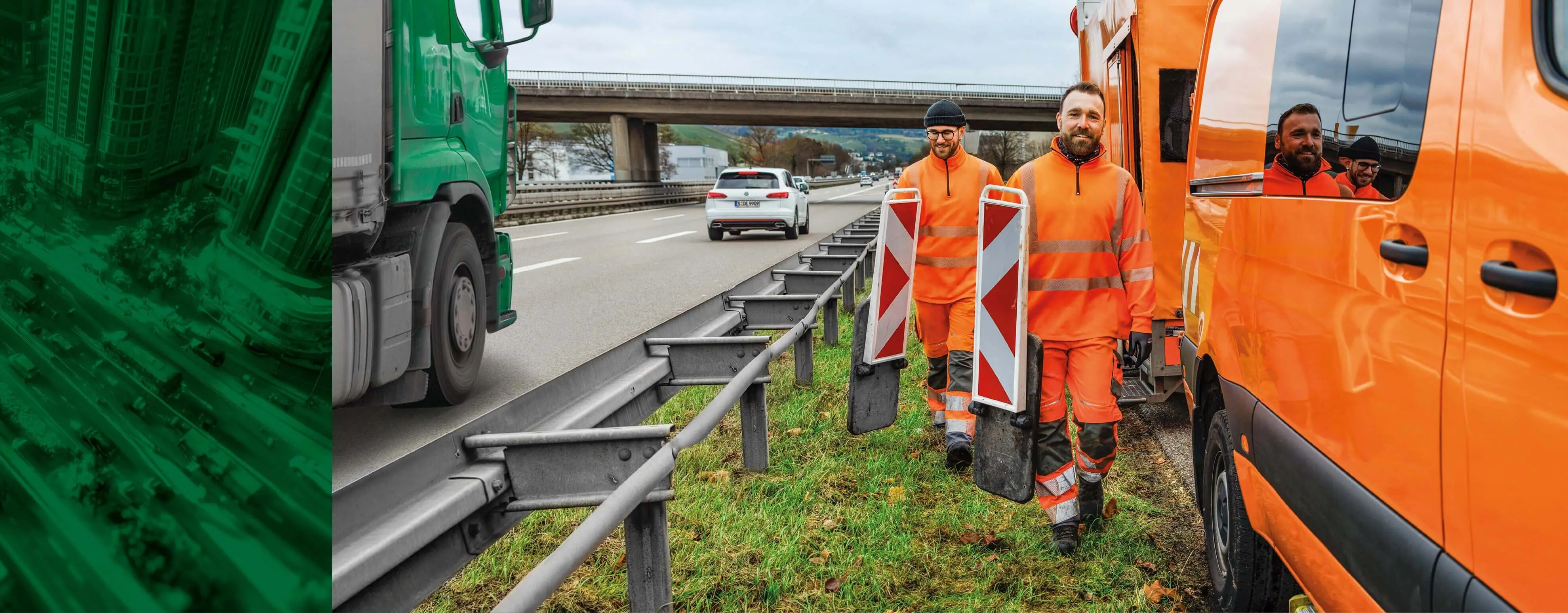
International comparisons also illustrate the significant role played by our roads as workplaces. In many countries, traffic accidents are among the most common causes of fatal workplace accidents. “Work zones” – locations where construction or maintenance work is performed on or beside the road while the flow of traffic continues – pose a particular danger. These areas are characterized by changed traffic routing systems, restricted lines of sight, and very dynamic driving situations. Even minor mistakes by other road users can have severe consequences.
Another relevant aspect of the roads as a workplace is that the type of traffic environment varies greatly. Different types of road pose different potential hazards. Roads in non-built-up areas are often characterized by high speeds, meaning accidents can be particularly severe. In contrast, built-up areas feature dense traffic, and drivers frequently encounter pedestrians and cyclists. Freeways pose other risks, such as when traffic jams form or when drivers encounter road work. These differences show that any necessary safety measures cannot be a one-size-fits-all solution, and instead always need to be tailored to the respective situation.
Interplay between infrastructure, technology, organizational measures, and personal conduct when out on the road
When considering our roads as workplaces, a fundamental problem is the fact that the actual risks involved are not always visible. This is because many statistical systems do not adequately register whether a journey was private or work-related. As a result, a proportion of the accident statistics remains inadequately documented, which makes it much more difficult to devise targeted prevention measures. It is only when the actual extent of the risks becomes visible that we can develop effective measures for the long term. In this context, a particular problem is also the fact that different data sources are not linked with one another. Information from police accident statistics, company reports, and occupational health examinations is often recorded separately, despite the fact that it could paint a more comprehensive picture if combined.
Another aspect to consider is the fact that modern traffic systems are very complex. Digitalization and connected/networked systems are fundamentally changing our workflows in road traffic. Although sat-nav systems, digital job management systems, and automated driving functions make many tasks easier, they also place new demands on drivers. Employees must process multiple sources of information at the same time and take decisions, all while paying attention to what is happening on the road. For this reason, driver distraction caused by technical devices is one of the biggest challenges to overcome to ensure road safety in the modern world.